School is Easy Tutoring

Tutoring Agency

  • Home
  • Our Difference
    • Our Offerings
  • Our Process
  • Subjects
    • English
    • Maths
    • Science
    • ESL
    • Social Studies
    • ACT Prep
    • Special ED
    • SAT Prep
    • FSA Test Prep
    • Language Studies
    • Test Prep
    • Spanish, French, German
    • Music
    • Home School
  • Location
    • Canada - British Columbia
      • Burnaby/North Shore
      • Langley North
      • Surrey/Delta
      • Tri-Cities/New West
      • Vancouver/Richmond
    • Canada - Alberta
      • Alberta South
      • Edmonton
      • Leduc
      • Sherwood Park
      • St. Albert
      • Northwest Calgary
      • Southwest Calgary
      • Northeast Calgary
      • Southeast Calgary
      • Airdrie
    • Dubai
      • Downtown Dubai
  • Explore
    • About Us
    • Blog
    • Subscribe to Newsletter
    • School is Easy in the News
    • Awards
    • Community Impact
    • Become a Tutor
    • Meet the Team
    • FAQ
  • Contact & Support
  • Franchise Opportunities

A Parent's Blog About Parent Interests by our Tutoring Company

When it comes to your child's development, educational potential, or their health, visit this section of our education blog for our latest articles. We'll focus on parent interests here. Subscribe to our newsletter (on the left or below on mobile) to get bi-monthly updates in your inbox.

Photographic memory and how to help kids improve their memory

Susan Cumberland Published: May 22, 2015 Last Updated Date: June 27, 2024

photographic memory and improving kids memory

Many of us are able to recall a familiar scene, say, the street your house is on. But how many people can actually recall every single detail of that scene? The ability to do so is referred to as having a photographic memory. But is photographic memory an imaginary concept? Or is it really possible? Keep reading to find out, plus learn how to help your kids improve their memory.

Photographic memory: is it real?

Some believe that people who are able to recall a picture with great detail simply have not lost their eidetic memory from when they were a child, as mentioned in a DNews video. Unfortunately, there have not actually been any studies that prove that photographic memory is real.

However, according to the video mentioned previously, there was one study done on the brains of eleven different people who have similar cognitive abilities. The results showed that these people actually had different brains than most people, which aided in their memory abilities. So, while it might not be proven that there is such a thing as photographic memory, some people are naturally better at remembering things than others.

Nonetheless, our memories are known to not always be reliable. John Green, a famous teen novelist discusses his experience of flashbulb memories and memory storage in this video. In short, his very clear memory of a dog pooping in a Nintendo was actually not what really happened. This of course becomes a problem when ethics are involved, such as in the case of court disputes. This TEDTalk explores the “fiction of memory” and “false memories, when people either remember things that didn’t happen or remember them differently from the way they really were” (as it is put in the description of the video).

How to help your kids improve their memory

One way that some people have a better memory is by following certain memorization techniques, whether they just know them subconsciously or practice them once they learn them. In his TEDTalk on memory, Joshua Foer explains that many people who compete in memory competitions actually consider themselves to have an average memory. However, what sets them apart is that they have trained themselves to perform ‘miraculous’ memory tricks by following ancient techniques. So, it is definitely possible to train a so-called ‘average’ memory.

One way to help your kids improve their memory is by approaching it in the way they learn best. For example, if your child is a visual learner, colour-coding notes may help them remember the important points. Or, if your child is an auditory learner, saying something over and over again that they need to memorize will most likely help them get it stuck in their head.

Another approach you can take is to play some memory-boosting games with your kids. This could mean playing a simple game of memory, where your kids have to make pairs out of different pictures that are flipped over. Or, you can find some fun games online, like at http://www.photographicmemorygame.com.


How to help students overcome homework excuses

Susan Cumberland Published: April 17, 2015 Last Updated Date: June 27, 2024

Students overcome homework excuses

From the classic “my dog ate my homework” excuse to more clever excuses like, “my backpack got stolen” or, “I left my binder in my mom’s car,” there are endless ways students can try to get out of doing and handing in homework. Here are some ways you can help students overcome homework excuses like these.

Try to understand why students don’t do their work

There are many reasons why a student may not do their homework. These might be:

  • Procrastination
  • Lack of interest
  • Wanting to get it perfect or a fear of failure
  • Being surrounded by distractions
  • It’s too difficult
  • It’s too much to do at once
  • It’s not as important as another task
  • They forgot
  • They didn’t have time

Help students overcome homework excuses by taking different approaches on assignments

We’re not talking about bringing the difficulty level down here. Although that could be the case with a student who is struggling, it might be helpful to simply lessen the amount slightly or break it up into smaller chunks.

Or, take a different approach with the homework. For example, if a student is experiencing a lack of interest in a project, try allowing them to take a creative approach on it. If you are a teacher or tutor, give them ideas of different options like turning an English project into an art project, a song, or a skit.

You can also have your students do some partner or group work so they are held accountable to someone else. This also avoids excuses about not having the right supplies, because even if one child doesn’t have their books, someone else in the group likely will. Another option is to schedule an assignment that is done in class or during a tutoring session. This will avoid the excuse of not understanding something, or finding it too difficult, because help will be readily available.

If you are a parent, talk to your child’s teacher or tutor about what other options there are to allow your child to take a creative approach on a project.

Other ways to help students overcome homework excuses:

If your students are not struggling with the assignment itself, but just have trouble doing homework in general, there are few things you can try to help them overcome homework excuses. If they seem to be struggling with procrastination, try giving them some study tips to follow. For example, turn off all devices when doing homework!

You can also encourage students to set earlier deadlines. Or, you could even have a deadline for a first draft before the final deadline for a paper. This will help them get the paper done early so that they don’t feel pressed for time on the final copy. It will also allow them to have more time to get feedback on their first draft before they submit the final copy.

And finally, encourage your students to have a space they can study in without distractions. If they don’t have a quiet space at home, recommend a library or a study area at school.

Whatever problem your student has with completing homework, try figuring out what it is and help them overcome homework excuses. A creative approach or changing up the usual ways may encourage them to get things done. Good luck!

Benefits of teaching kids music at an early age

Susan Cumberland Published: January 16, 2015 Last Updated Date: June 28, 2024

Music plays a large part in human culture, and can be heard throughout the world. Here in Canada, music is often taught as a class in elementary school. But what really comes out of the time your children spend in music class or other music lessons? Read on to learn about why you should teach kids music at a young age.

Teaching kids music at an early age

Music is a language, and children learn languages easier. Just like it is harder to start learning French or Italian when you’re older, it is a lot harder to learn to read music and play an instrument as you age. Children are oriented towards learning language, so they will be able to pick up the language of music faster and easier.

Teaching kids music for memory retention skills

Learning music helps improve memory. According to Musikgarten, one of the leading companies in early childhood music education, when children learn melodic and rhythmic patterns, it develops their memory. Music helps develop the left side of the brain, which means it also helps with processing language and new information. Putting new information to a tune can also help your child to remember it. Just think about the ABC song!

Music makes kids’ brains work harder. The growth of neural activity in kids is actually heightened due to music, since you are using more of your brain. This will help kids with things like problem solving and math.

Teaching kids music to advance culture and society

Music channels culture. This is why it is good to expose your kids to local music. Vancouver musician David Vertesi is a strong advocate of this, and he recently touched on the matter in an article he wrote for the Huffington Post. He mentions that if kids have a positive experience with local music, they will grow up to be a generation that cares about local arts and culture.

Music brings kids together, and helps them socially. Through group music making, kids will learn to listen to each other and share their creativity. In a world that values collaboration, this is a great skill to start learning at a young age through music.

Your child may have started taking piano lessons, be enrolled in a group music tutoring, or simply be in a music class at school. Whatever it is, the music they are learning is definitely beneficial to many aspects of their life, and will continue to have a positive impact on them as they grow. So, keep encouraging your kids to learn music, and they will thank you in the future!

Types of New Years resolutions to encourage your children

Susan Cumberland Published: January 9, 2015 Last Updated Date: June 28, 2024

New years resolutions to encourage your child

A new year provides an excellent opportunity to have a new start and make some positive changes in your life. Your kids can also benefit from a new start by making new years resolutions. Having the skill of goal setting will help your child in the future, and will help them become better learners. Here are some types of New Years resolutions that will encourage your children.

Make positive New Years resolutions

Make sure all of your child’s resolutions have a positive spin on them. So, instead of saying they don’t want any cavities, have them say they are going to brush their teeth twice a day and not eat so much sugar. Or, instead of saying they want to stop being such a picky eater, they can say they will be open to trying new foods.

Fewer resolutions will encourage your child

Don’t let your child become overwhelmed by having too many resolutions. Make sure all their resolutions are attainable. If they do have quite a few goals they really want to make, they should prioritize them so they stay focused on the most important resolutions.

New Years resolutions for young children

Your younger children might not have so many academic goals they need to think about right now. However, you can help them create resolutions that deal more with character. This will help them succeed academically later on. For example, helping them get organized now will help them with their organizational skills as a teenager. Have them make a resolution to make sure their whole room is clean before they go to sleep. Or, they can aim to clean up one activity before they move on to another.

Break down goals for teens

Teens can have more complex goals, but it is still important to make sure they are attainable. In order to do this, split a large or hard goal into small steps. This is a good goal setting skill that will help them later in life. An example of a resolution that can be broken into steps is obtaining an A in a class they find difficult. They could break this into smaller goals like reviewing 30 minutes every day, seeking help from their teacher at least once per unit, and making flashcards for each unit at least three days before the test.

Another example is to try to saving money. Your teenager can have several smaller goals to make that happen. First, they can put at least 50% of each paycheck they get straight into their savings account or piggy bank. Then, they can make a budget for the rest of their money. With their budget, they can focus on a specific area or store they don’t want to spend so much on. For example, “I will not spend more than $20 at Tim Horton’s a month.”

For each goal your child meets, make sure you acknowledge their accomplishment. Seeing their results and what they can do will help build their confidence. So, sit down with your kids to make some new years resolutions, and have a Happy New Year!

Teach your kids organizational skills

Susan Cumberland Published: January 2, 2015 Last Updated Date: June 28, 2024

They may not have too much homework or a job, but it is important for kids to learn how to be organized. Teaching your kids organizational skills will help them later when time management can make or break their grades, and being late to work can get them fired. Here are 5 organizational skills kids should learn.

Teach your kids organizational skills

Get rid of clutter

If your child has a desk at school with an open front or drawer underneath that allows for some storage, it can easily get cluttered. In order for them to keep their space at school neat, encourage your child to regularly get rid of things they don’t need. Papers are especially easy to pile up, but even little kinder surprise toys or dollar store erasers can easily be purged. Unless your son or daughter is starting a collection, you may want to get them to reduce their pile of various animal-shaped erasers that is doing nothing other than cluttering up their desk.

Have a place for everything

For the toys and novelty school supplies that your child doesn’t want to get rid of, at least teach them to have a place for everything. Even just making sure they hang up their jacket when they get home will teach your kids organizational skills. It will also help their elementary school teacher keep the coatroom from becoming a zoo in the mornings. So it’s a win-win!

Don’t allow playtime until things are put away

Once they have a place for their toys, encourage your kids to put them in that place once they’re done playing. Before starting with the next game, make sure they clean up from their last activity.

Learn to have a schedule

Even though they might not have a lot of homework, it is still good for your child to start keeping track of their schedule. Maybe it’s a chart in their room outlining when they have to do their chores or go to swimming lessons. Or, they could even keep a little agenda to write down when they have a field trip or that they have a spelling test on Thursday.

Learn to be on time

Finally, teach your child the importance of punctuality at a young age. Building this habit while they are young will help them later. Before long, turning an assignment in one day late could result in the loss of an entire grade.

Teaching your kids organizational skills will not only help them now, but will also greatly benefit them later in life! So start with these little things while they’re still young to get them off to a good start.

How to find educational crafts and activities on Pinterest

Susan Cumberland Published: December 26, 2014 Last Updated Date: June 28, 2024

Especially during the holiday season, you may be looking for ideas on how you can make education fun for your child. But between decorating your house and preparing family dinners, you probably won’t have a lot of time to think of super creative educational activities. Luckily, there is a tool on the Internet that can help you out! Pinterest is a popular social media site that is very useful for discovering creative ideas in many categories – not just education. Read on to learn how to use this up-and-coming site to find fun educational crafts for your kids.

Try these two Pinterest tricks to search for educational crafts and activities!

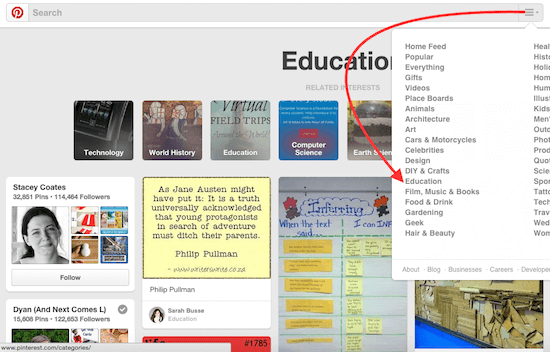
One way you can start searching for educational activities on Pinterest is simply by clicking on the button with three horizontal lines on the right of the search bar. This will open up the categories list, where you can click on education. Right away you will see a bunch of great educational crafts!

Pinterest tricks to search for educational crafts

If you are looking for a more specific subject, this is when you head to the search bar. If you know your child is struggling in math, or even just doesn’t like math, try to find a fun activity to get them excited about it. Simply type in the subject you are looking for, along with “activities” or “crafts.”

Not every item that comes up will be amazing. However, once you come across one awesome idea, you can springboard off that and do a new search with related tags. For example, say you were searching for “geometry activities” and came across this cone-shaped scone idea. From there, you can search for “math baking” to find all sorts of yummy math projects!

Pinterest math idea with cone cookies

Now that you know how to find educational crafts, how do you save them?

In order to keep track of all the educational activities you find on Pinterest, you will need to make an account on this social platform. Then, whenever you see an idea that you like, you click “pin it” on the top left-hand corner of the post.

Pin it button on Pinterest craft

This will save it to a “board.” You can create different boards for different categories of pins. So, you could have one for math ideas and another for science. This way, you can come back to it when you log in to your account at a later time.

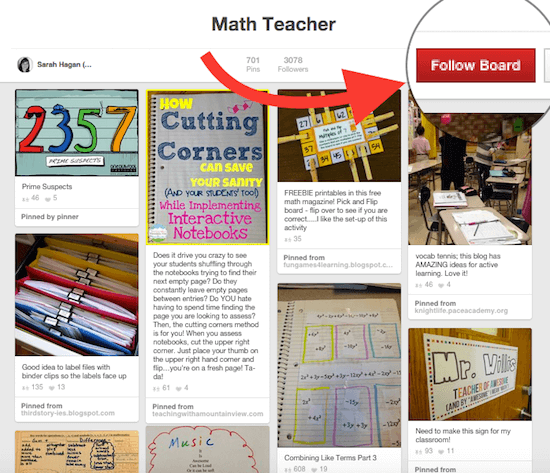
You can also “follow” other people’s boards, so you can keep up to date with any new educational ideas or things they find on the web that might be useful to you.

Follow the Pinterest Board

Time to put your Pinterest knowledge to work!

Once you’ve figured out how Pinterest works, it’s time to start pinning! There are lots of great “tags” to check out on the social platform for creative educational crafts. Since we’re approaching the holidays now, try searching for “holiday math activities” or “holiday homework.” You may be surprised with what you find. There is everything from gingerbread worksheets or this fun Christmas counting tray. Happy holidays!

  • « Previous Page
  • 1
  • …
  • 14
  • 15
  • 16
  • 17
  • 18
  • …
  • 22
  • Next Page »
Book a Tutor Online Now!

Filter the blog

  • All blog posts
  • All News
  • Parent Interests
  • Teacher & Tutor Resources
  • Kid’s Health

Newsletter signup!

Get educational topics delivered to your inbox bi-monthly or less! Unsubscribe anytime.

CAPTCHA
Refresh
SIE Testimonials

Thank you for visiting School is Easy Tutoring!

Aspiring to be one of the best tutoring franchise globally, we strive to ‘reach for the moon.’ We are constantly asking for feedback from our parents and teachers. If you have any questions to ask us, or would like to share your thoughts on your experiences with us, use our contact info below.

Mail only address

School is Easy Tutoring Head Office (North America) 100 York Blvd, Suite 400 Richmond Hill, ON Canada, L4B 1J8


School is Easy Tutoring Head Office (UK) 170 Erdington Road, Aldridge, WS9 0RZ

Our Tutoring Franchise

  • Educational Resources
  • Our Website Use Privacy Policies
  • Terms of Service
  • Our Tutoring Franchise
  • Career Opportunities

Tutoring Areas

  • Canada – British Columbia
    • Burnaby/North Shore
    • Langley North
    • Surrey/Delta
    • Tri-Cities/New West
    • Vancouver/Richmond
  • Canada – Alberta
    • Alberta South
    • Edmonton
    • Leduc
    • Sherwood Park
    • St. Albert
    • Northwest Calgary
    • Southwest Calgary
    • Northeast Calgary
    • Southeast Calgary
    • Airdrie
  • Dubai
    • Downtown Dubai

Common Tutoring Subjects

  • ESL Tutoring
  • French Immersion Tutoring
  • Math Tutoring
  • Science Tutoring
  • English Tutoring
Book a Local Tutor Own a Franchise Visit Our Blog
Facebook - School is easy Instagram - School is easy Linkedin - School is easy Twitter - School is easy

School is Easy is a proud member of the LaunchLife family.

LaunchLife International Inc

Copyright © 2026

· School Is Easy Tutoring | 100 York Blvd, Suite 400, Richmond Hill, ON, Canada, L4B 1J8 | +1 833 473 2791 (Head Office)

    For further information or to schedule a free consultation, please fill in your details below.

    604 283 9914

    we'd love to connect with you.

    For further information or to schedule a free consultation, please fill in your details below.

      For further information or to schedule a free consultation, please fill in your details below.

      +971-58-559-EASY

      we'd love to connect with you.

      For further information or to schedule a free consultation, please fill in your details below.

      we'd love to connect with you.

      CAPTCHA
      Refresh